
The center of mass system
Blog post description.
3/19/20251 min read
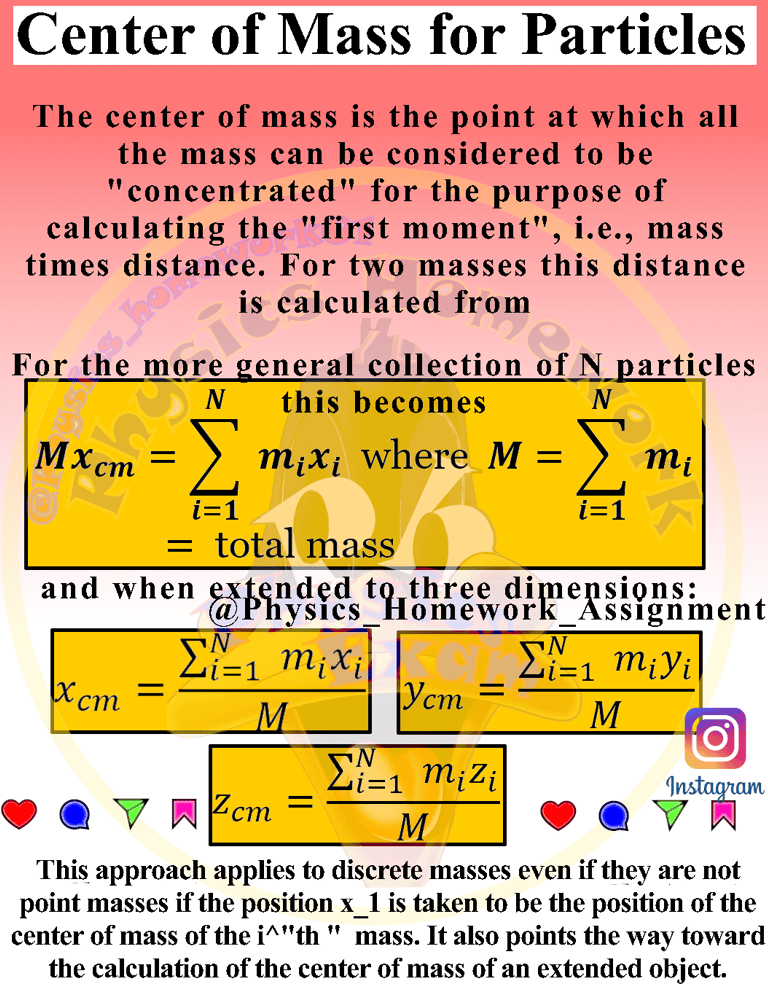
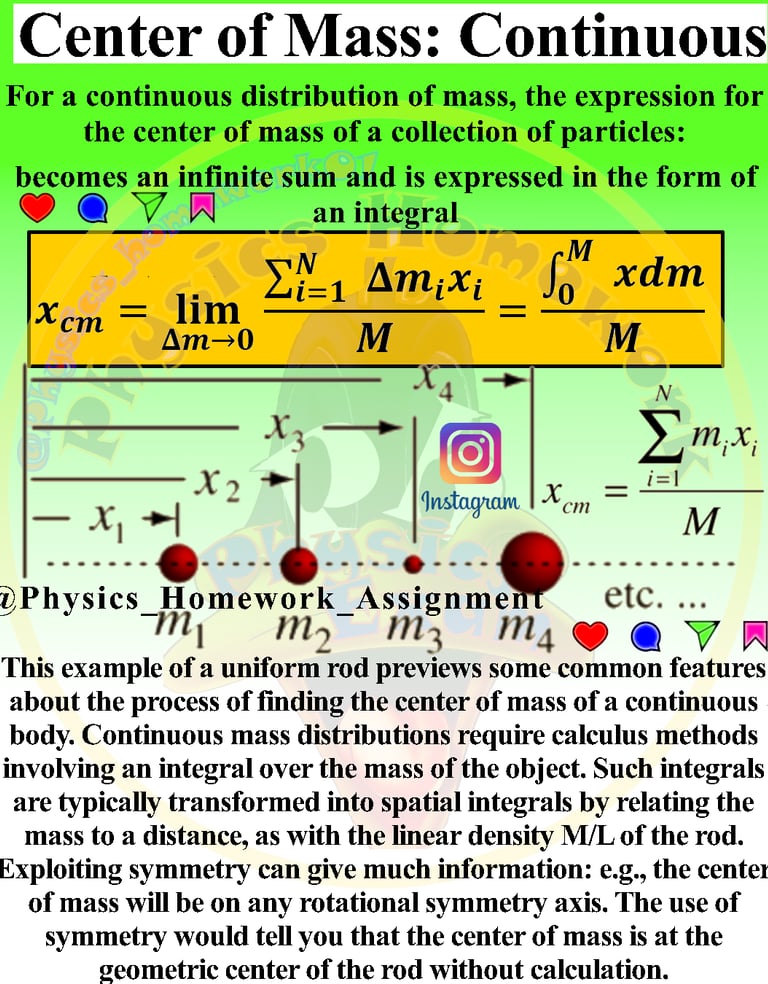
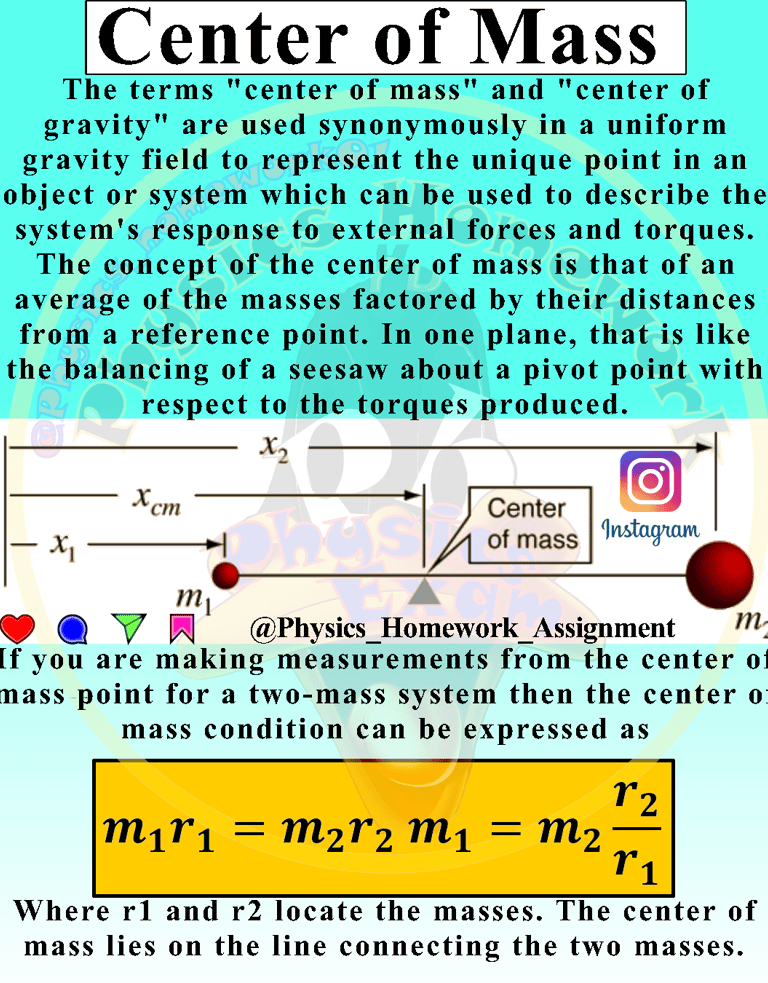
The center of mass system is a fundamental concept in physics that describes the point at which the total mass of a system can be considered to be concentrated. It is especially useful in analyzing the motion of a system of particles or rigid bodies. The center of mass depends on the distribution of mass within the system, acting as the average position of all mass elements. This concept simplifies the study of motion since it allows the system’s behavior to be analyzed by focusing on the motion of its center of mass rather than tracking individual particles.
A key example of the center of mass system is in two-body orbital motion, such as the Earth-Moon system. Both bodies orbit their common center of mass, not just the Earth's center, which is essential in astrophysics and satellite mechanics. Another example is in sports, where understanding the center of mass helps athletes maintain balance and stability—such as a gymnast adjusting body posture to control movement. The center of mass is also crucial in vehicle stability, where designers ensure a low center of mass to prevent tipping in cars and motorcycles.
The center of mass plays a crucial role in collisions and explosions. In an isolated system, the center of mass follows a predictable path, even if internal forces cause the objects to move apart. This principle is applied in rocketry, where the motion of a multi-stage rocket can be analyzed by considering the shifting center of mass as fuel burns and mass is ejected. These applications highlight the importance of the center of mass in physics, engineering, and everyday life.
Solutions
Expert assistance for your physics lab assignments.
Support
Help
© 2025. All rights reserved.